London parking field guide
Find free parking without guessing
A free space is useful only when you can park there lawfully. Start with the street, the time and the vehicle, then check the signs and the authority responsible for that road.
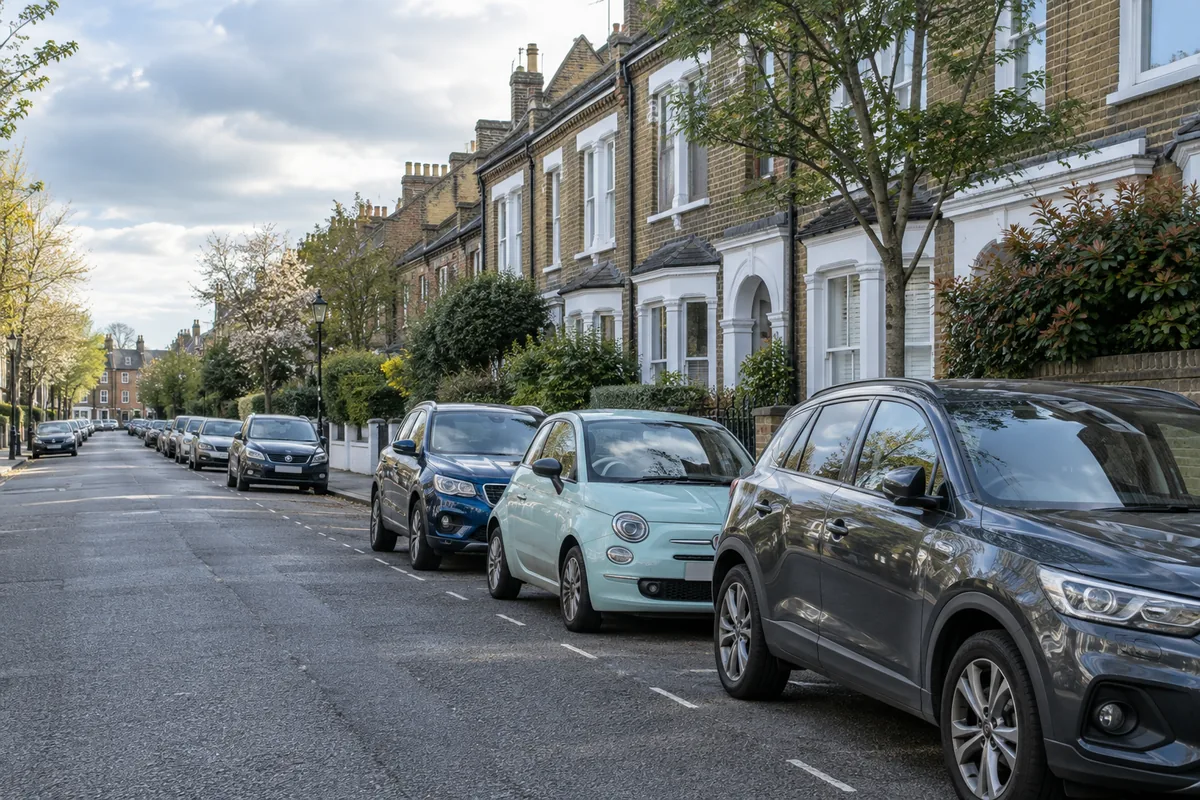
Start with the street, not a promise
London does not have one permanent list of free bays. A bay can change with a controlled zone, a permit rule, a temporary suspension or a special event. A map is a starting point; the sign beside the space is the decision point.
Before leaving the car, identify the highway authority, read the zone entry sign if there is one, and read the plate for the exact bay. If you cannot establish the permitted hours and vehicle class, choose another place rather than infer that an empty space is free.
- Check the borough or TfL road owner before relying on a map.
- Read the bay sign and any nearby suspension notice at the kerb.
What this guide can and cannot do
The guides explain yellow lines, parking bays, controlled parking zones and red routes using current government and transport authority guidance. They do not track live bay availability or replace the sign and legal order at a location.
You can use the zone-map guide to find the right official source, then return to the restrictions explainer to interpret what you see. Keep driving charges such as the Congestion Charge separate from parking permission; paying to enter an area does not reserve a space.
- Use the parking checklist before leaving the vehicle.
- Treat old app listings and archived maps as history, not live instructions.
A careful way to save money
Look for signed short-stay or unrestricted bays outside their controlled hours, where the authority permits that use. The exact answer is local: the bay sign, zone sign and council information must agree at the time you park.
If the street is a TfL red route, use TfL's own map and stopping rules. If it is a council street, use that council's current parking map and notices. The same postcode can contain different controls on adjacent roads, so check the actual side of the street.
- A free bay may still have a maximum stay or a no-return rule.
- A suspension can override an otherwise usable parking bay.
The four facts behind any parking decision
Write down the exact street and side of the road, the day and full time interval, the vehicle and any permit or Blue Badge, and the marked space you intend to use. A search result that omits one of those facts cannot establish permission for your visit. Even two bays in the same street may have different plates.
Work out the latest time you might return, not only the appointment end time. Allow for the walk back and a delay. If the sign changes conditions during that interval, check both parts of the stay. If a maximum stay or no-return condition applies, leaving briefly and returning may not reset the permission.
- Write a latest-return time before choosing the bay.
- Compare the sign with the vehicle, permit and whole stay.
An example of a misleading free-space search
Imagine a map suggests a council street has evening parking. At the kerb, the first marked place is a loading bay and the next is a resident bay. Neither becomes a general free space because the area appears outside a controlled zone. The marking and the plate for each space answer different questions from the map.
A better search starts with the council map to narrow the area, then checks the actual bay, zone sign and temporary notices on arrival. If the space is occupied or a sign cannot be read, move to the prepared alternative. This method is slower than a promise of 'free parking near me', but it produces a decision you can explain.
- Use the zone-map guide to identify the road authority.
- Use the checklist at the kerb before leaving the car.